Hello everyone! Today, I’m going to talk about the light pollution exhibit at the Smithsonian Natural History Museum. This exhibit shows how we can prevent light pollution and protect the night sky. It’s very informative and also shows us the importance of the night sky and it’s important links to different cultures. But you might be wondering, what is light pollution?
Light pollution occurs when light from artificial sources—like lightbulbs and car headlights—is aimed in the wrong direction and spills into the sky. This makes the light from stars less visible because the sky gets “overcrowded” with artificial light. Normally, we can see the stars because there isn’t much light at night to compete with, but when there’s too much artificial light, it makes the night sky hard to see.
A big contributor to light pollution is poorly designed street lighting. Some street lamps are just light bulbs on poles facing upwards, which is a huge waste of light. To combat this, we can add cones on top: this can focus the light onto the street and away from the sky, which not only wastes less light but prevents more light pollution. Just adding these cones can decrease energy consumption in your neighborhood by noticeable amount, and really improve the area’s lighting levels.
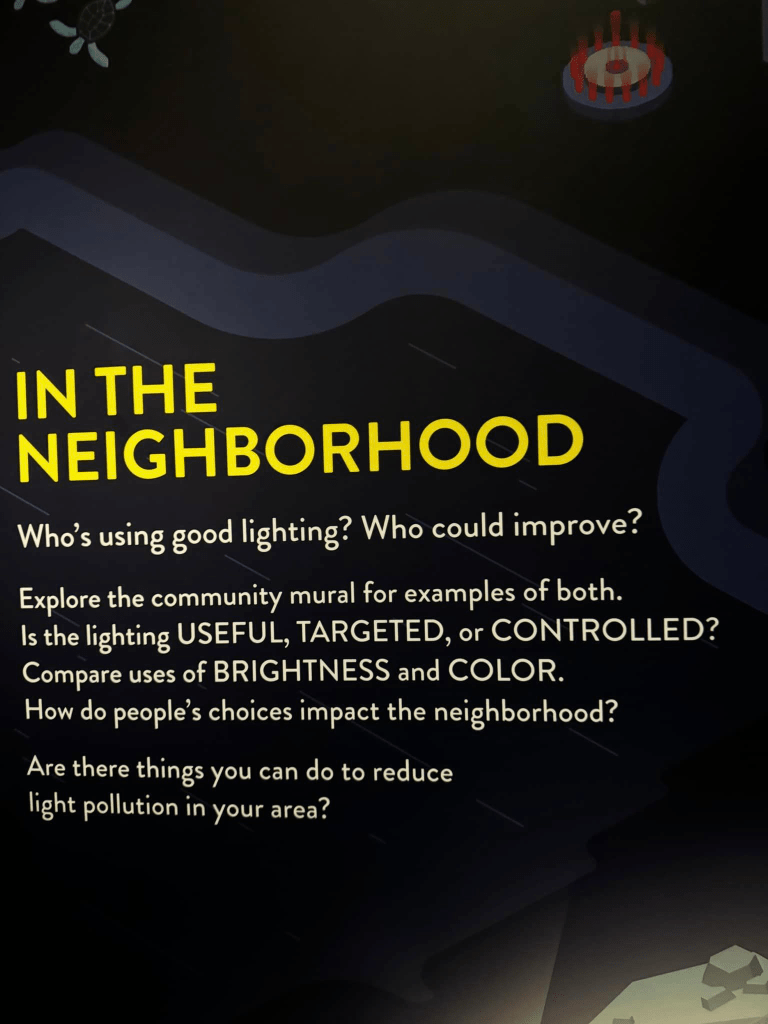
Speaking of improving your community, in the exhibit, there’s a fun activity where you explore a large board of a neighborhood and identify all the sources of light pollution. It really makes you think about how many lights are scattered around and how much they affect our night sky.
One thing that the activity taught me is that the color of the light matters too. Ideally, you want a nice, warm orange light, like the color of the setting sun. Bright white or intense lights contribute more to light pollution.
Also, it’s important to remember that artificial lights don’t just affect humans—they also harm animals. For example, fireflies rely on their flashing light signals to communicate and find mates. Bright artificial lights can disrupt these signals, making it harder for fireflies to find each other, which harms their population.
Artificial lights can also confuse birds. Some birds use the stars to navigate, and when there’s too much light, it can lead to disorientation, causing them to crash into buildings or even have seizures, leading to a number of deaths in cities.
Baby turtles are another example. When they hatch, they use the moonlight to find their way to the ocean. But bright lights on the shore can cause them to head in the wrong direction, away from the ocean. This can be very dangerous for them and can even lead to their death.
Other nocturnal animals, such as moths and insects, are also affected by light pollution. These creatures rely on natural light cues, and artificial lighting can disrupt their life cycles.

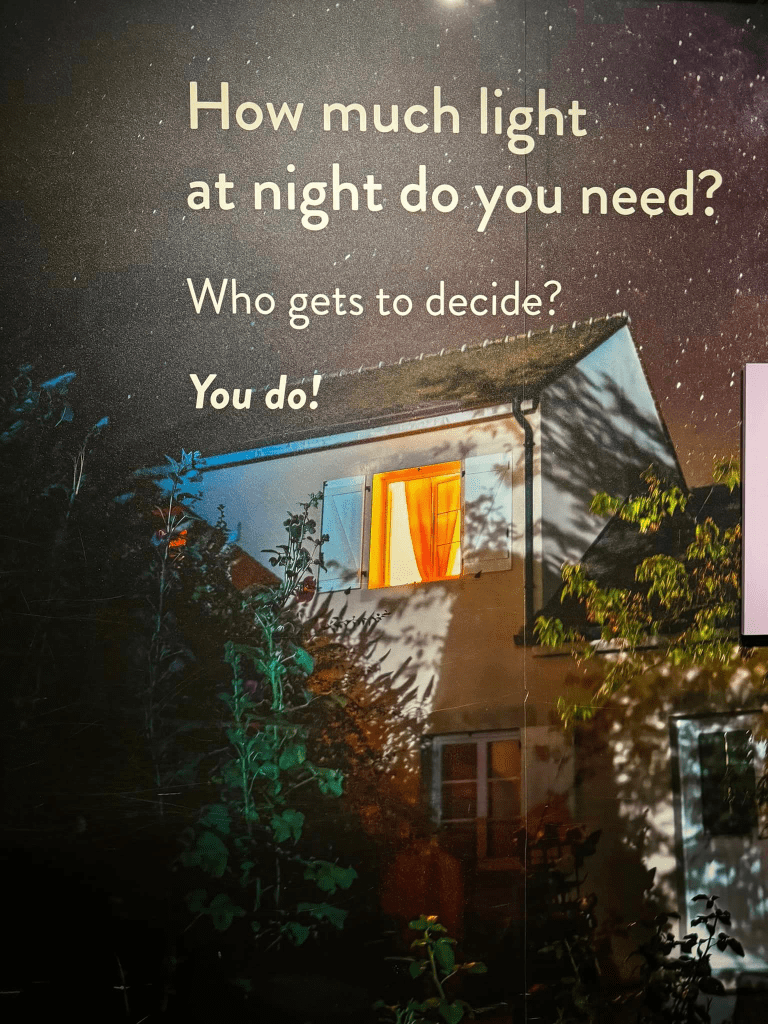
That pretty much sums up the exhibit! I encourage everyone to think about ways we can reduce light pollution in our communities. It’s not just about protecting the night sky—it’s about protecting the environment and wildlife too.
Anyway, bye everyone and see you later!
 Avatar Dragons
Leave a comment