Hello everyone! Today, I’m going to be talking about the six intraspecific and interspecific relationships in nature. The six intraspecific and interspecific relationships are competition, predation, parasitism, symbiosis, mutualism, and commensalism.
Competition is something that occurs between species that require the same resources, such as territory, water, or food. Often, the stronger species obtain the resources after fighting with the other species. When competition occurs between different species, it is called interspecific, and when it occurs within the same species, it is called intraspecific. For example, two elephants could engage in combat to secure a female, which represents intraspecific competition, while a lion and a hyena could fight over food. Most of the time, it is intraspecific. Competition has negative consequences for each species involved.
Predation is when a predator consumes its prey. Herbivores and carnivores can be predators and prey. For instance, a rabbit may eat grass and act as a predator towards the grass, while being prey to another species such as a wolf, which in turn may be prey to another carnivore like a bear. Predation is mostly interspecific. Predation benefits the predator, while the prey experiences negative consequences, as in the case of a lion consuming a gazelle. In this scenario, the lion (predator) gains food, while the gazelle (prey) dies.
Parasitism occurs when one species benefits from another species’ work while causing harm to the host species. Parasites live on or within their hosts and reproduce to increase their own population during their life cycle. Parasites can reside inside their hosts (endoparasites) or on their hosts (ectoparasites). For example, a virus that enters a cell is an endoparasite, while a flea that attaches to a dog is an ectoparasite. Parasitism is mostly interspecific. In parasitic relationships, the parasite receives a benefit, while the other species experiences negative consequences. If we observe a mosquito and a human, we observe that the parasite (mosquito) obtains human blood, while the human loses blood.
Symbiosis is when two species depend on each other.
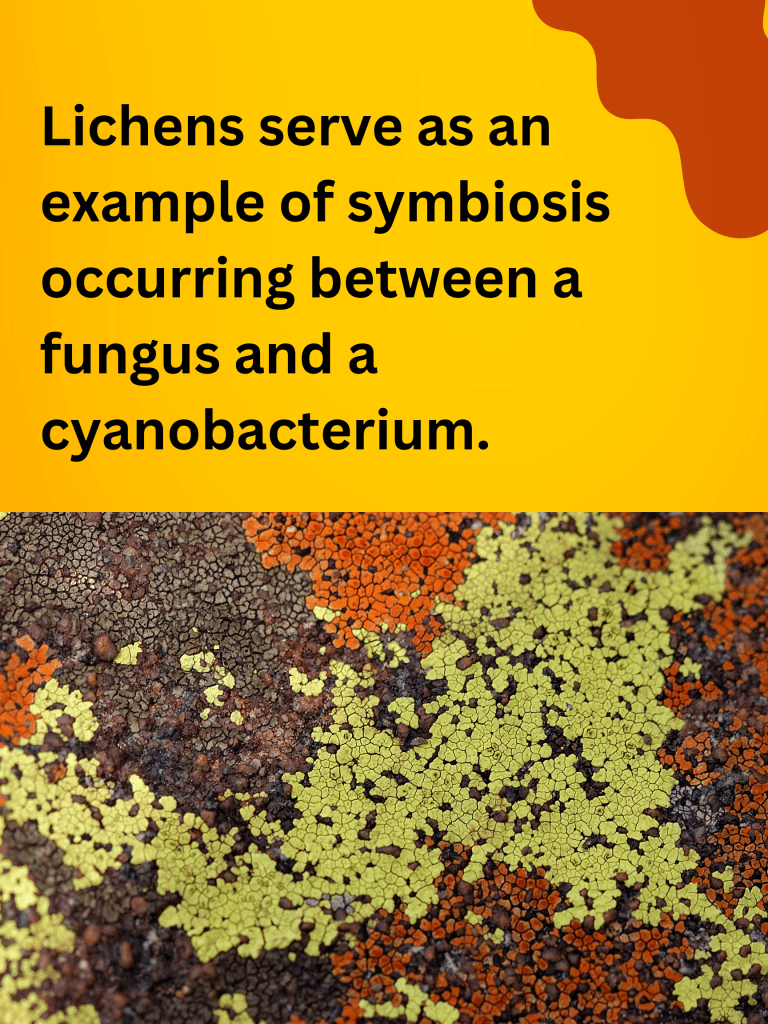
It can also occur between a fungus and an alga. Symbiosis is mostly interspecific. In symbiotic relationships, each participating species receives a benefit and relies on the other for survival. This is seen in the relationship between a fungus and an alga, where both species receive a benefit and depend on each other to survive.
Mutualism is when two species work together to obtain a benefit, but they do not necessarily rely on each other for survival. This type of relationship is not exclusive to animals. For example, bees collect nectar from flowers while also aiding in their reproduction. However, bees can engage in mutualistic interactions with other species, distinguishing it from symbiosis. In mutualism, each species receives a benefit but does not require the other species to survive. An example is the relationship between ants and aphids, where ants obtain honeydew from aphids, and aphids receive protection from ants against other insects. However, ants do not depend on aphids, and the same applies to aphids. Mutualism is mostly interspecific.
The last relationship is commensalism.
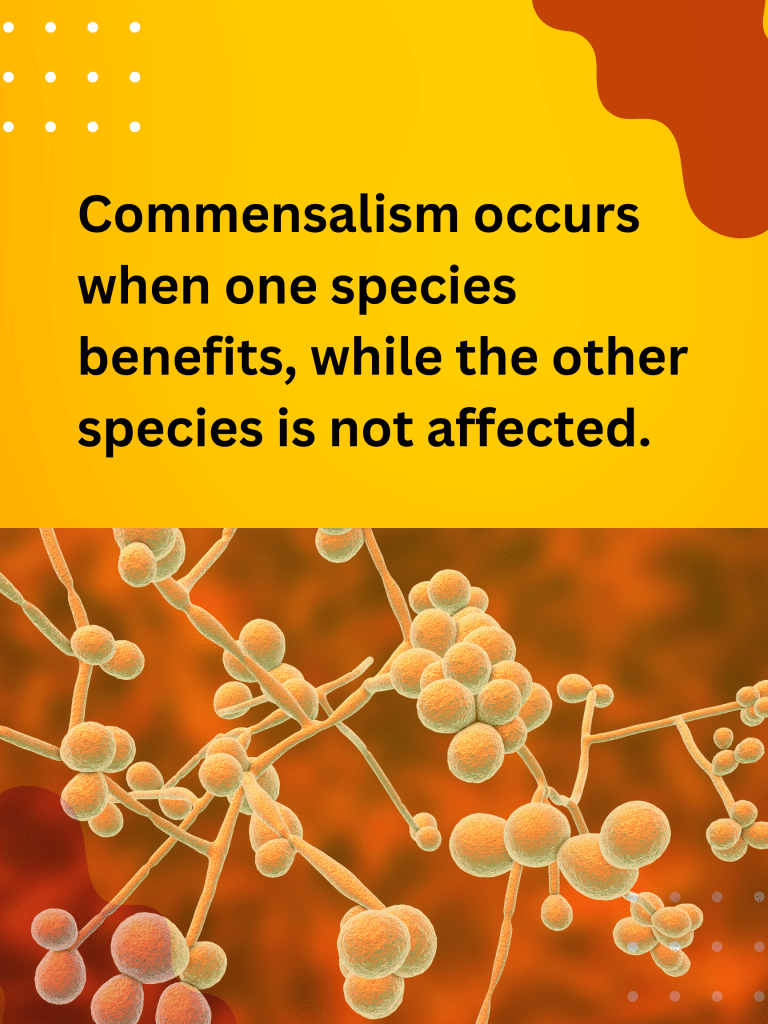
An example is the attachment of barnacles to turtles, where nothing changes for the turtle. Commensalism is mostly interspecific. In commensal relationships, one species receives a benefit while the other species remains unaffected, as seen in the relationship between whales and barnacles, where barnacles receive a benefit while nothing changes for the whale.
I hope you enjoyed learning about the the six intraspecific and interspecific relationships with me! Anyway, bye everyone and see you later1
 Avatar Dragons
Leave a comment