Hello everyone! Today, I’m going to talk about AI and Medicine. I have discussed this topic before on my blog, but this is my first in-depth blog post about it. I’ll start by explaining what AI is, in case anyone is unfamiliar with it. AI, or artificial intelligence, is essentially an improved version of humans. It specializes in a particular task and is not proficient in other areas. While there are exceptions, most AI systems focus on doing one thing well, such as analyzing CT scans for abnormalities.
Over time, it will become even more advanced and surpass human abilities in certain areas.
AI has numerous applications in medicine.
In surgical procedures, AI can assist surgeons in fine-tuning their incisions. An example of this is the da Vinci surgical system commonly used in hospitals. Additionally, AI can serve as a mental health aid for depressed patients and in various other mental health scenarios. Some AI-driven interventions aim to help individuals overcome addiction and improve their quality of life.
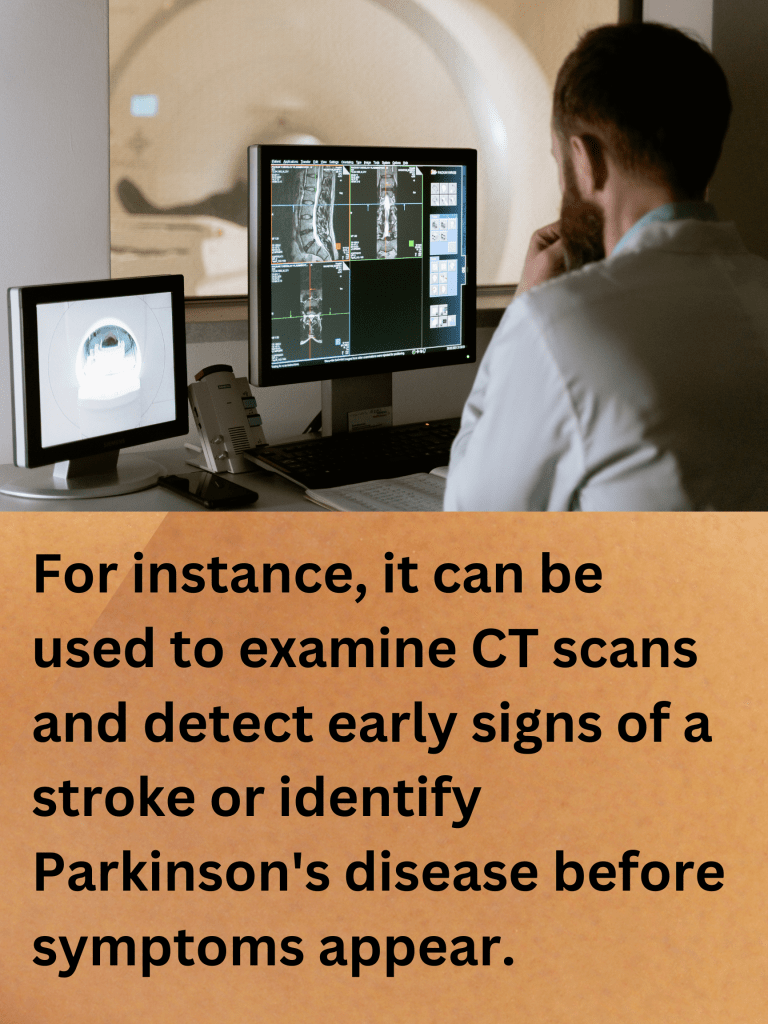
I have met someone with personal experience in the field of healthcare AI, particularly in radiology. Radiology involves interpreting CT scans, MRIs, X-rays, and other complex imaging techniques. AI systems can quickly identify issues in these scans, which saves a significant amount of time for human doctors.

Although their previous work was focused on healthcare, their company has since shifted to airport security. They have developed high-tech systems that analyze whether individuals are carrying weapons into airports. Trust and reliability are crucial concerns in this field. Depending on the AI system’s reliability, rare mistakes may occur. For example, there could be a one in a million chance of an error.
This lack of trust can create issues, similar to the boy who cried wolf story. However, in the case of AI, the occasional mistake is unintentional, and the system is truthful in the majority of instances. Despite the potential for errors, AI can still greatly benefit healthcare, but more work is needed before widespread adoption in hospitals.
Thank you for reading, and I’ll see you later!
 Avatar Dragons
Leave a comment